
Sunscreen is the quietly essential step in any routine. It is also the one most often skipped, usually because the formula feels heavy, leaves a cast, or simply sits wrong under makeup or after a shave. The answer is rarely to give up on sunscreen. It is to find the one you will actually wear every morning.
This guide breaks the choice down into a few clear decisions, then pairs each one with a formula from our edit, selected by board-certified dermatologist Dr. Cherise Levi.
Start with the non-negotiables
Whatever your skin type or gender, three rules come first, in line with the American Academy of Dermatology's sunscreen guidance:
- Broad spectrum. The label should say "broad spectrum," meaning the formula is tested against both UVA rays (linked to visible aging) and UVB rays (linked to burning).
- SPF 30 or higher for daily wear.
- Reapply at least every 2 hours when you are outdoors, and after swimming, sweating or towel drying, even if the formula is labeled water resistant. As the Skin Cancer Foundation puts it, no matter the SPF, reapplication every two hours is key.
Apply generously to the face, neck and ears, and give it about 15 minutes before sun exposure. Most people use far less than the amount the SPF was tested with, so be generous.
Mineral vs chemical sunscreen
This is the question we hear most, and it is less a matter of right and wrong than of preference.
Mineral (physical) sunscreens use zinc oxide and/or titanium dioxide as their filters. Many people with sensitive or reactive skin prefer them, and today's formulas are far more refined than the chalky versions of the past. Tinted mineral sunscreens add iron oxides, which help soften any white cast and even out tone.
Chemical sunscreens use organic filters such as avobenzone, homosalate, octinoxate and octisalate. They tend to be lightweight and invisible on the skin, which makes them appealing under makeup or for anyone who dislikes any tint at all.
As SkinCeuticals explains in its mineral vs chemical sunscreen guide, both types protect the skin effectively. Both work when they are broad spectrum, applied generously and reapplied. The right one is the one that suits your skin and that you enjoy wearing.
Sunscreen for men
Skin does not change with gender, but habits do. Men are often less likely to wear sunscreen daily, frequently because many formulas feel greasy or look shiny. If that sounds familiar, look for:
- An untinted or sheer finish that disappears into the skin.
- A lightweight, oil-free texture that layers comfortably over post-shave skin.
- A two-in-one moisturizer with SPF, so there is one less step in the morning.
The same advice holds for anyone who wants their sun protection to go unnoticed.
Matching sunscreen to your skin type
Sunscreen for oily skin
Choose oil-free or matte-finish formulas, and look for "non-comedogenic" on the label. Lightweight textures tend to feel more comfortable through the day.
Sunscreen for sensitive skin
Mineral filters and fragrance-free formulas are often the gentler starting point. Patch test anything new along the jaw for a few days before committing.
Dry or dehydrated skin
Look for a moisturizing base with humectants such as hyaluronic acid, which can let your sunscreen double as your day cream.
The Lé Derm Lab sunscreen edit
Each pick below comes from a different brand, and every detail is taken from the product's own listing.
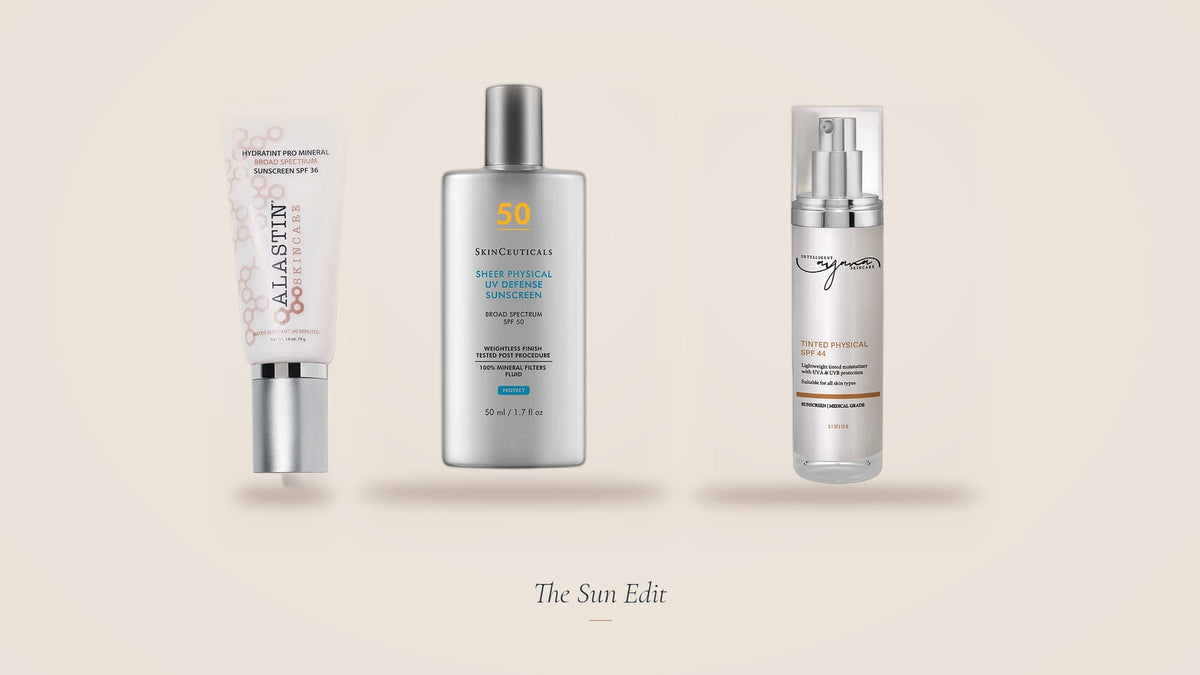
Ayana Intelligent Skincare Tinted Physical SPF 44 A 100% physical sunscreen with zinc oxide 10% and titanium dioxide 5.5% in a moisturizing base with a sheer, universal tint. It is water resistant for 40 minutes, includes hyaluronic acid, and is light enough to wear alone or under makeup, with a dewy finish. For: dry or sensitive skin, and anyone who wants a hint of tint.
Alastin HydraTint Pro Mineral Broad Spectrum Sunscreen SPF 36 A lightweight, all-mineral tinted formula with titanium dioxide 8.9% and zinc oxide 3.4%, plus antioxidants and iron oxides. It is fragrance free, water resistant for 40 minutes, and gives a soft, glowing finish with a universal tint designed for most skin tones. For: anyone who wants a radiant, tinted mineral sunscreen.
SkinCeuticals Sheer Physical UV Defense SPF 50 A weightless, 100% mineral face sunscreen with 5% zinc oxide and 6% titanium dioxide and no chemical filters. It leaves a sheer matte finish and is non-comedogenic and paraben-free. For: oily or combination skin, and men who want a shine-free finish.
Revision Intellishade Clear An untinted, oil-free daily moisturizer with broad-spectrum SPF 50, built on chemical filters (avobenzone, homosalate, octinoxate and octisalate), with peptides, antioxidants and hyaluronic acid. The listing recommends it especially for combination and oily skin. For: a single-step morning routine with no tint.
Wearing it well
Make sunscreen the last step of your morning skincare and the first step before makeup. Keep a second bottle where you will see it, whether that is your desk, gym bag or car, because the simplest way to reapply is to keep it within reach. And remember that sunscreen works hand in hand with shade, a wide-brimmed hat and sunglasses.
FAQ
What SPF should I use on my face every day? Choose a broad-spectrum sunscreen with SPF 30 or higher, applied generously and reapplied at least every 2 hours when outdoors.
Is mineral or chemical sunscreen better? Neither is universally better. Mineral formulas use zinc oxide and titanium dioxide and are often preferred by sensitive skin, while chemical formulas tend to feel invisible. Choose the one you will wear daily.
Do men need a different sunscreen than women? No. The same rules apply. Many men prefer untinted, lightweight or matte formulas, which is a matter of texture rather than protection.
Can I wear sunscreen under makeup? Yes. Apply it as the final skincare step and let it settle for a few minutes before makeup. Tinted mineral formulas can also stand in for a light base.